



University of Maine Cooperative
Extension
WALDO COUNTY HOME
| COUNTY
OFFICES | PROGRAMS |
RESOURCES
| PUBLICATIONS |
WHAT'S
NEWS | UMAINE EXTENSION
HOME | UMAINE
CALENDAR
Doing Business Radio Show
Thursday 10am - 11am
CANCELLED for June (1st Thursday of every month)
BACKYARD COMPOSTING DEMONSTRATION
Saturday
9am—10:30am
June 7 Woodlawn Museum
The Blackhouse, Route 172 Surry Road, Ellsworth
FMI 667-8671
WCEA Executive Committee Meeting
Monday 6:15 pm
June 9 (2nd Monday of every month)
University of Maine Cooperative Extension
992 Waterville Rd, Waldo. Public welcome
BIODIESEL
AND FUEL ETHANOL WORKSHOP
Thursday 9:45am—5pm
June 12 Highmoor Research Farm
(See page 7 for details)
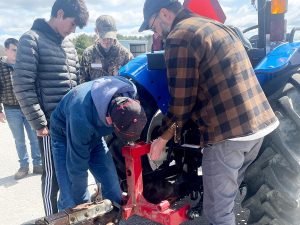
INTRODUCTION TO FARM EQUIPMENT
Wednesday 5pm
June 18 MOFGA Headquarters, Unity
Contact MOFGA at 586-4142
PASTURE WALK: FENCING BASICS AND PASTURE LAYOUT
Sunday 2-4pm
June 22 Tir na nOg Farm, Pownal
Contact Holly at 688-4483
KNEADING CONFERENCE
Thursday-Monday
July 31-August 3 Skowhegan
(See page 6 for details)
BUFFERS
AND INVASIVES
Thursday 6:30-8pm
July 31 Old Town House, Union
Talk and slide show by Liz Stanley, U Maine Extension and Annette Naegel,
Georges River Land Trust
Maine farm days
Friday-Saturday
August 15-16 Misty Meadows Farm, Clinton
VEGETABLE VARIETY TRIALS Highmoor Farm Tour
Tuesday 5pm
August 19 Highmoor Farm, Monmouth
Bringing Out the Best in
Gardening
Article by:
Amy Witt, Home Horticulturist,
University of Maine Cooperative Extension
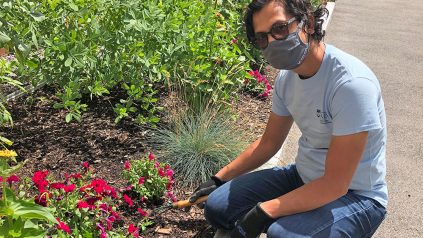
According to the American Community Gardening Association, a community garden is
“any piece of land gardened by a group of people.” Community gardens promote
healthy communities. It is currently estimated that there are 10,000 community
gardens within U.S. cities (Urban Community Gardens). Wouldn’t it be great to
have a community garden in every community throughout the United States? Think
how healthy the U.S. would be! Let’s do our part by striving to have community
gardens across the state of Maine. Read on to find out how some of your fellow
Master Gardeners are contributing to this effort.
There are numerous benefits associated with gardening including growing
nutritious food and beautiful flowers, physical exercise, education, new
friendships, nourishing the soul and rejuvenating the spirit. In
addition, community gardens provide the benefits of:
- serving as a catalyst for neighborhood and community development
- beautifying neighborhoods
- conserving resources
- providing opportunities for intergenerational and cross cultural connections
- preserving green space
Whether in an urban, suburban or rural setting; located at a school, in a
neighborhood, the inner city or an institution, community gardens help build
communities. Successful community gardens can be established anywhere, all
that’s needed is a vision, a plan, land, permission from the town or property
owner, support from local organizations/businesses, dedicated people, donations
for supplies, an advisory group, and gardeners.
Once the idea is formed, the next step is to determine if there is interest
amongst the residents. This can be done informally by polling people, putting
an article in the community newspaper, and putting flyers up around town. After
confirming interest, form an advisory committee to develop a plan, and then
propose the idea to the town.
When the town has given its approval, identify your resources; solicit funding,
donations and gardeners. In many instances it takes the sponsorship from one
organization or local nursery/garden center to validate the garden and generate
support and commitment from other local organizations/businesses, and the
residents. For example, once the organizers of the Long Island community garden
received funding from the Kay E. Dopp Foundation (via the Maine Community
Foundation); several local groups (including the kids at the Long Island
School) also donated money and supplies to the effort. The support of Estabrook’s
greenhouse in Yarmouth has also had a huge influence on the success of the
gardens in Yarmouth.
With the exception of the Bayside garden, the members of each garden pay a
rental fee for their plot(s). The average rent is $25 / season, which pays for
compost, mulch, loam, organic pest control, tools and other materials. The
number of plots and renters in each garden varies. Yarmouth is the largest and
has 120 plots and 68 renters. Bayside has 25 plots and 25 renters and the other
gardens fall in somewhere in between. The renters (except with the City of
Portland’s gardens) are also asked to contribute to the garden throughout the
season by participating in fall and spring clean-up days, maintaining and
gleaning in the Plant a Row for the Hungry (PAR) gardens, installing, building
and maintaining new raised beds and so on.
The gardens are much more than a place to grow food. They have become gathering
places to meet and make friends, share information, celebrate, help out
neighbors in need, grow new gardeners, and build stronger communities. All the
gardens host various workdays, educational events and social gatherings (Long
Island has an annual garden party and Yarmouth, Long Island, Bayside and
Portland all host a Harvest Supper.) Four of the five gardens also participate
in the PAR program.
While there are many similarities, each garden is unique in its own way. For
example, the garden in Yarmouth has a children’s program. This program offers
hands-on gardening education to kids between the ages of 4 and 10 and an
opportunity for the kids to have their own 4’ x 6’ plot to tend with their
family.
The program in the City of Portland is involved with the Great
Sunflower Project. The gardeners are given heirloom sunflower seeds. By
watching and recording the bees on the sunflowers in their garden plot, they are
helping the researchers understand the challenges the bees are currently facing.
If you are interested in starting a community garden and helping Maine build
healthy communities, there are two excellent resources to help get you started
- the American Community Gardening Association
www.communitygarden.org and Urban
Community Gardens
www.mindspring.com/~communitygardens/index.html.
The University of Maine Cooperative Extension publication #4300 Organizing
Your Community Garden also has some good tips. This publication is available
online at www.umext.maine.edu
Amy Witt can be reached at 1-800-287-1471 or
awitt@umext.maine.edu.
$ome Option$ for Re$ourceful Living
USE
LESS/SUBSTITUTE
Stick to basic nutrient-dense foods for variety and versatility.
Use lowest priced form of food item.
Try recipes using less costly protein-rich foods such as eggs, cheese, beans,
dairy products and peanut butter.
Avoid buying expensive, calorie-dense snacks.
Lower home heating temperature.
Raise cooling temperature or go without air conditioning.
Don’t rent or buy more house than you need.
Turn down water heater thermostat.
Select classic styles in quality fabrics rather than fads.
Select clothes suitable for several seasons.
Recycle clothes.
Buy clothes that can be mixed and matched.
Plan travel to avoid “back tracking.”
Don’t buy more car than you need.
Keep the car longer.
Use public transportation when possible.
USE TLC TO KEEP THINGS
Wrap foods before storing to retain freshness, and store foods promptly.
Rotate foods using oldest first.
Avoid wasting food; use leftovers to make nutritious frozen dinners.
Take good care of kitchen utensils and appliances.
Develop regular maintenance schedules.
Take care of problems when still minor.
Check weather stripping and caulking.
Clean rugs, furniture, draperies regularly.
Remove spots and stains promptly.
Make repairs when needed.
Wear old clothes for rough jobs.
Follow label instructions for laundry and dry cleaning to help clothing last
longer.
Practice good driving methods.
Use your car owner’s manual.
Get regular maintenance and service checkups.
Park in areas with good security.
DO-IT-YOURSELF
Eat at home; brown bag lunch; plan a picnic.
Plant a garden; can and freeze surplus.
Learn to get the most from the meat you buy.
Make use of your freezer; prepare recipes in quantity and freeze for later.
(Your freezer is more efficient if 3/4 full).
Do simple home repairs and maintenance yourself.
Make draperies, slip covers, etc. and refinish furniture.
Install home insulation.
Enlist entire household’s participation in energy conservation.
Mend, repair, or alter clothes yourself.
Sew some of your own clothes.
Trade services with neighbors.
Store clothes properly.
Walk, ride a bike or a horse, take public transportation.
Combine trips, car pool.
Wash your car at home instead of paying for a car wash.
Do as much car maintenance as you can yourself.
h different companies before buying a vehicle.
Shop for low-cost air fares.
Eat a balanced diet. Exercise properly.
Get adequate rest. Learn first aid.
Reduce insurance costs with higher deductible or co-payment.
IMPROVE SHOPPING SKILLS
Shop from a list.
Buy weekly specials and use store coupons.
Watch price per unit and compare.
Read the labels to get your money’s worth in nutrition.
Stock up on specials with a long shelf life or freezer life.
Shop sales for household goods, furnishings, and appliances.
Consider utility costs as well as initial price.
Underbid the asking price of a house.
Shop carefully for credit.
Shop sales for your wardrobe.
Check care requirements for durability.
Buy quality that suits your purpose.
Know the store’s exchange policy.
Don’t impulse buy—plan your purchases.
Bargain for the best deal on a vehicle.
Shop around for the best vehicle loan deals.
Compare insurance rates wit
If
possible, get prescriptions by generic name, not brand name.
Buy insurance through group plans.
More Ideas to Conserve
Buy
fewer extra services (premium cable and/or phone options) and/or items
(magazines, book/tape club memberships, etc.)
Cut down on cleaning supplies (buy multi-purpose products or make your own from
basic supplies).
Consider renting or borrowing (rather than buying) equipment that you won’t use
frequently. Avoid finance charges on your credit cards.
Make long-distance phone calls during lower-rate periods at night and on
weekends.
Where possible, e-mail or write letters and post cards rather than phone long
distance.
Plan your oven use by baking the main dish, vegetable, etc. all at one time.
Prepared by Carolyn McKinney, Ph.D. Family Resource Management
Specialist, Consumer and Textile Sciences Department, The Ohio State University,
June 2001.
Conservation Tips for the Office
Staple
Diet: If the country’s 75 million white collar workers used one fewer staple
each day, they’d make a daily savings of 5,500 lbs. of steel—that’s about 900
tons a year. Scale down your staple habit, and reuse paper clips instead.
Thrive In An Urban Jungle: Modern furniture and electronic equipment can emit
enough chemicals to make the air in our homes and offices more hazardous than
the air outdoors. Some plants are particularly effective absorbers of these
harmful pollutants. Clean up the air indoors and brighten your work and living
space by surrounding yourself with Spider plants, Boston ferns, rubber plants,
and palms.
From the book: “1001 Ways to Save the Earth,” By Joanna Yarrow
Second Annual Kneading Conference Scheduled
The 2nd
annual Kneading Conference, of which the Heart of Maine RC & D is a project
partner and fiscal agent, is scheduled for August 1-2, 2008 in Skowhegan. The
two-day event invites professional and home bakers, farmers, millers, oven
building and innovative community members to participate in hands-on
demonstrations and lectures on progressive ideas in the art of wood-fired bread
baking and food production, local grain growing and milling, and oven building.
Last year’s conference brought together over 100 participants, presenters and
volunteers from all over Maine and as far away as Hawaii and France.
The goal of the conference is to celebrate and inspire the idea of locally
growing and milling grain for bread baked in wood-fired ovens as a way to bring
the cycle of food production back to a small circle that fosters ecological and
community sustainability. At the center of this idea is the need for
partnerships between farmers, millers, oven builders, bakers and community
members.
Field sessions will happen throughout the state on July 31st and August 3rd.
For more information, visit the Heart of Maine website at
www.heartofmaine.org.
Biodiesel Workshop
Thursday, June 12, 2008
Location: Highmoor Research Farm, Monmouth, Maine (52
Rte. 202)
(Note: for people North there will be a similar workshop held in Oakfield on
June 11th; for details contact Peter Sexton, phone 764-3361 or e-mail:
psexton@umext.maine.edu).
Cost: $6.00 paid in advance with registration.
Please send name, address, phone number, and email to: UMaine Extension,
Biodiesel Workshop, 125 State St. 3rd Floor, Augusta, ME 04330. Checks should be
made payable to: “Kennebec County Extension Association.”
A mobile biodiesel demonstration unit from North Carolina will be in Central
Maine on June 12 to review and demonstrate steps in biodiesel processing. This
is your chance to see biodiesel processing in action. Piedmont Biofuels, a
biodiesel cooperative from Pittsboro, North Carolina, will lead the seminar. The
day will begin with an introduction to biodiesel production, proper handling and
use, and the US biodiesel industry, followed by a hands-on opportunity to make a
small batch of biodiesel. The workshop will include a tour of a mobile biodiesel
production and oilseed crushing trailer, giving participants the opportunity to
see all the components of a small commercial biodiesel production system in
operation. Participants will learn how to crush their own oilseed crops for oil
that can be used to produce high quality biodiesel. In addition, there will be a
review of oilseed crop production and of the economics of biodiesel production
from oilseeds.
The main objective of the workshop is to demystify biodiesel production,
emphasizing methods for producing high quality fuel as well as proper safety
precautions. People of all levels of experience are encouraged to attend.
Questions are encouraged; so come out and learn about how you can convert plant
matter and restaurant waste into high quality fuel..
Tentative Program:
9:45 am - Registration
10:00 am - Small-Scale Biodiesel Processing: Discussion and
Demonstration.
Matt Rudolf, Executive Director, Piedmont Biofuels
12:30 pm - Break for lunch (bring your own bag lunch;
beverages will be provided)
1:15 pm - Biodiesel Production (continued). Production
of Oilseed Crops. Economics of
On-Farm Biodiesel Production
5:00 pm - Close of Workshop
For more information, contact UMaine Extension, Kennebec
County office at 622-7546 (1-800-287-1481 in Maine) or e-mail:
cfitzgerald@umext.maine.edu.
Parents Are Teachers Too program
If you are expecting or recently had your first baby, call 1-800-287-1426 for
more information or to enroll in the PATT program to help your child get the
best possible start in life.
Eat Well program
Could you use help in stretching food stamps, cooking and shopping for one or
two, providing snacks for children? Contact UMaine Cooperative Extension Eat
Well Program for a nutrition aid to help you.
Staff
Extension Educators:
Jane Haskell: Business, Youth & Community Development
Rick Kersbergen: Agriculture & Natural Resources
EAT WELL NUTRITION STAFF:
Sandy Dubay, Regional Nutrition Education Professional
Beth Chamberlain, Pat Fraser: Eat Well Nutrition Associates
4-H PROGRAM AIDE:
Joyce Weaver
PARENTS ARE TEACHERS, TOO STAFF:
Pam LaHaye, Coordinator
Martha Powers, Diane Russell, Ellie Weider
EXTENSION SUPPORT STAFF:
Sónia Antunes
Annette Hanser
Also:
Liz Stanley, Horticultural Aide, Knox-Lincoln-Waldo county
Caragh Fitzgerald, Ext. Educator, Kennebec & Waldo county
Waldo County Extension Association
PRESIDENT: Barbara Gould
SECRETARY: Lucia (Chia) Murdock
TREASURER
Michelle Gharst
Jacqui Lee
Andrew Marshall
Robert Nelson
Anne Rothrock
Putting knowledge to work with the people of Maine

A Member of the University of
Maine System
Last Modified:
06/11/08
These pages are currently being maintained from the
Waldo County Office, University of Maine Cooperative Extension.
Send comments, suggestions or inquiries to santunes@umext.maine.edu
COUNTY OFFICES | PROGRAMS | RESOURCES | PUBLICATIONS | WHAT'S NEWS | UMAINE EXTENSION HOME | UMAINE
Information in this web site is provided purely for educational purposes. No responsibility is assumed for any problems associated with the use of products or services mentioned in this web site. No endorsement of products or companies is intended, nor is criticism of unnamed products or companies implied.
If you are a person with a disability and will need any accommodations to participate in a UMCE program, please contact your county office to discuss your needs. For assistance via a TTY line call 1-800-287-8957.