



Bearberry

To print a copy, we recommend downloading the (PDF) print version. (Download the free Adobe Acrobat Reader,)

University of Maine Cooperative Extension
Bulletin #2500

Gardening to Conserve Maine's Landscape: Plants to Use and Plants to Avoid
By Lois Berg Stack, Extension ornamental horticulture specialist


BunchberryMaine's Native Landscape
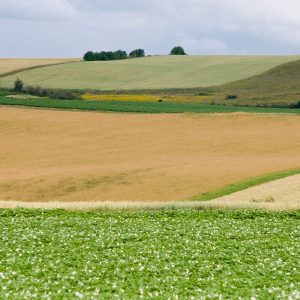
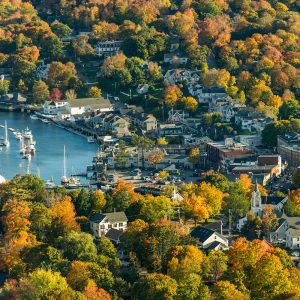
Maine's landscape is famous for its variety. Within the state one can find ocean beaches, lakes, rivers, mountains and forests. Maine is locally influenced by both coastal and inland weather patterns. This creates relatively mild areas, and areas that are almost arctic within the state's 300 mile length and 200 mile width. Marine rises from sea level to over 5,000 feet in elevation at the top of Mount Katahdin. This wide range of elevation results in a diversity of habitats including flat sandy plains, rolling hills, rounded summits and craggy mountains with shear cliffs. Maine's forests vary from spruce and fir near the coast, to hardwoods in the western and northern hills. More than 100 types of habitats have been identified with about 1,500 native plant species spread across the state's varied landscape.
 

Staghorn SumacWhat Are Native Versus Non-native Plant Species, and Why Should I Care?

Native plants are those species that either arrived in Maine without human intervention, perhaps thousands of years ago, or originated here. Non-native species were brought intentionally for horticultural or other uses, or came accidentally in ships' ballasts, crop seed or in soil. Some non-native plants continue to escape from cultivation and become naturalized in wetlands, lakes, woods, fields or roadsides.

Natural predators and diseases are left behind when non-native plants are introduced here. Therefore, their spread is uncontrolled and such non-native species as purple loosestrife, Japanese barberry and Asian honeysuckle can become serious pests.
Swallow-tail Butterfly
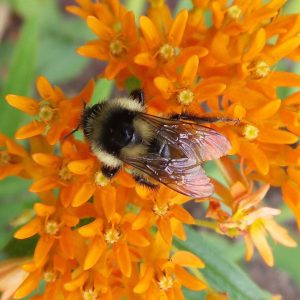
One long-term effect of invasive non-native species is to degrade habitat for native plants and animals. These plants choke out native vegetation, diminish the availability of food plants for wildlife, and alter the behavior of native animals such as pollinators, plant-eating insects and fruit-eating birds. Unchecked, invasion by non-natives could drive some species to extinction. This is why non-native plants are a major concern to people who want to protect native species and natural areas.


Plants to Avoid and Why

Most familiar nursery plants are not invasive and are appropriate for planting. However, a few popular species, including purple loosestrife and Japanese barberry, are highly invasive. A single purple loosestrife plant can produce three million seeds in a single season! Even the tiniest root fragments can grow into new plants. Japanese barberry is invading Maine's forests and wetlands because birds disperse its seeds over long distances. Both species are very difficult to eradicated once they become established.
 

Non-native Plants Considered Most Invasive in Maine Include:

What Can You Do to Help?

Looking for Native Plants at Your Garden Center

New England AsterNative plants are well adapted to Maine's climate and are therefore hardy. Most plants in the Native Plant Recommendations are available at local garden centers, where the staff can usually help customers with plant selection. Ask if their native plants are nursery-propagated. Collecting plants, cuttings, seeds, or sods from the wild can devastate natural populations. If the nursery cannot guarantee that its native plants are nursery-propagated, purchase your plants elsewhere. 


Trees
Shrubs
Vines and Ground Covers
Perennials: Flowering Plants
 
Perennials: Ferns

Key to Light and Moisture Abbreviations
List Alphabetized by Common Name

List Alphabetized by Scientific Name

For more information about Maine native plants, see Bulletin #2502, “Native Plants: A Maine Source List.”

The Maine Invasive Plants fact sheet series are also available online at www.umext.maine.edu/publications/homegarden.htm.

For more information send a stamped, self-addressed envelope to:

Maine Natural Areas Program Department of Conservation
93 State House Station
Augusta, ME 04333-0093
(207) 287-8041
http://www.mainenaturalareas.org/  

Or contact your county office of the University of Maine Cooperative Extension.

This publication was made possible by:

  • Friends of Acadia
  • Garden Club Federation of Maine
  • Josselyn Botanical Society
  • Maine Natural Areas Program
  • Maine Department of Conservation
  • Maine Department of Agriculture
  • Maine Landscape and Nursery Association
  • Maine Outdoor Heritage Fund
  • National Fish and Wildlife Foundation
  • National Park Service
  • Plant Conservation Alliance
  • The Nature Conservancy
  • University of Maine Cooperative Extension
  • University of Maine Horticulture Club
  • U.S.D.A. Forest Service
  • Copyrighted illustrations by Alison Dibble and William H. Drury, Jr.

Published and distributed in furtherance of Acts of Congress of May 8 and June 30, 1914, by the University of Maine Cooperative Extension, the Land Grant University of the state of Maine and the U.S. Department of Agriculture cooperating. Cooperative Extension and other agencies of the U.S.D.A. provide equal opportunities in programs and employment.

Return to Publications Catalog Online Table of Contents
Return to Publications Homepage


Putting knowledge to work with the people of Maine

The University of Maine Cooperative Extension logoNational Park Service logo

A Member of the University of Maine System
Last Modified: 02/01/08
These pages are currently being maintained from the
Communications Office, University of Maine Cooperative Extension.
Send comments, suggestions or inquiries to www-questions@umext.maine.edu


COUNTY OFFICES | PROGRAMS | RESOURCES | PUBLICATIONS | NEWS AND EVENTS | UMAINE EXTENSION HOME  | UMAINE

Information in this web site is provided purely for educational purposes. No responsibility is assumed for any problems associated with the use of products or services mentioned in this web site. No endorsement of products or companies is intended, nor is criticism of unnamed products or companies implied.