



University of Maine Cooperative Extension logo  slicing and chopping healthy vegetables

Information you can use,
research you can trust

Home     Find your county office     Publications     About us     News     Events     Programs     Partners & other resources     UMaine

Find more of our publications and books at extensionpubs.umext.maine.edu.


Vegetables for Health
Peas

Bulletin #4256

Revised and updated by Extension Professor Louise O. Kirkland
Originally developed by Extension Nutrition Specialist Nellie Hedstrom

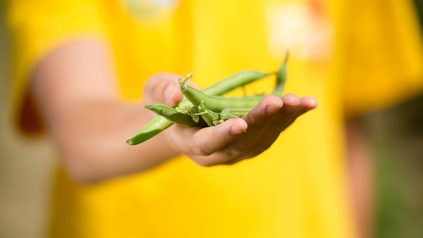
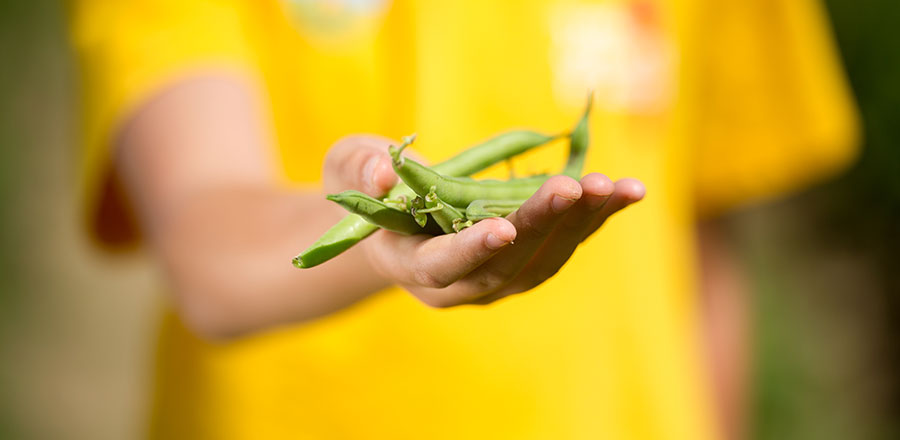
Most home gardeners in Maine try to have peas to harvest by the Fourth of July. You can add peas to the menu even earlier by going to local farmers markets and vegetable stands. Common types you will find in the market include shell (green) peas as well as edible-pod peas such as snow peas (Chinese pea pods) and sugar-snap peas.

Nutrition Information

All types of peas are good sources of vitamin A, vitamin C, thiamin, folate, iron, and phosphorus. One cup of shelled peas has 125 calories, and one cup of edible-pod peas has 65 calories.

Only about 5 percent of all green peas grown come to the market fresh. Frozen peas retain their color, flavor, and nutrients better than canned peas, and are lower in sodium. Snow peas are lower in protein since their seeds are very small; however they provide twice the calcium and slightly more iron than shelled peas.

Selection

Shelled peas: Choose peas that have been stored at cool temperatures, with pods that are firm and bright green. Avoid overlarge pods, as the peas will have a starchy taste. Plan on buying about a pound for every cup of peas you want.

Snow peas: Choose bright green pods that are shiny and flat without a twisted appearance. Purchase a quarter pound for each serving.

Sugar-snap peas: These should be bright green and firm to be the sweetest. Purchase a quarter pound for each serving.

Storage

For the sweetest flavor, serve peas as soon after picking or buying as possible. As peas age, the sugar content turns to starch, making the peas less sweet. Store peas in the shell in the crisper section of your refrigerator in a perforated plastic bag. Use within two days.

Preparation

Shell peas: Shell the peas just before cooking or serving. To prepare shell peas, break off the stem end and strip the string along the edge. Pop the pod open and scrape the peas out with your thumb. Wash and cook, or eat raw.

Snow peas: Rinse well before use. Trim off both ends with a knife or kitchen shears. String will not be noticeable. Eat raw or cooked.

Sugar-snap peas: Rinse well before use. Trim off the ends and remove the strings from both sides of the pod. Eat raw or cooked.

Boiling or Steaming

All peas (shelled, snow, sugar-snap) can be cooked by using a small amount of water. The less liquid you use, the less vitamin C you lose. Boiling time for shell peas is 5 to 10 minutes.

Snow and sugar-snap peas can be steamed over boiling water as well. Cooking time will be from 2 to 3 minutes.

Stir-Frying

Use snow and sugar-snap peas in stir-fry dishes. Use a small amount of either oil or broth and cook quickly—for only 1 to 2 minutes—to retain color and crispness.

Layered Lettuce Salad
Serves 6

1 head of lettuce, or 4 cups other leafy greens, washed,
   torn, and dried
1 large cucumber, washed and thinly sliced
1 cup onion, thinly sliced
2 cups fresh peas (or frozen, thawed)
2/3 cup low-fat yogurt
1/3 cup shredded cheese
2 tablespoons bacon bits, or 3 slices crumbled cooked
   bacon

Spread the lettuce or greens in the bottom of a large bowl. Cover the lettuce with cucumbers, onions, and peas. Spread with yogurt and top with cheese. Cover the bowl with aluminum foil or plastic wrap. Refrigerate overnight to allow flavors to blend. Sprinkle bacon on top just before serving. Serve cold.


 Nutrition Facts
 Serving Size 1
cup


  Amount Per Serving

 Calories 113

Calories from Fat 32


% Daily Value

 Total Fat  3.5g

5%

 Saturated Fat 1.8g

9%

 Trans Fat 0.0g


 Cholesterol 8.1mg

3%

 Sodium 232.3mg

10%

 Total Carbohydrate 14.3g

5%

 Dietary Fiber 3.3g

13%

 Sugars 7.1g


 Protein 7.0g


 Vitamin A 12%

Calcium 12%

 Vitamin C 15%

Iron 5%


Crunchy Stir Fry
Serves 4

1/2 cup sliced onion
1 cup thinly sliced carrots (about 2 medium)
1 teaspoon vegetable oil
1 teaspoon dried basil, crushed
1 cup fresh sugar pea pods (or frozen)
1 tablespoon water
1 medium apple, cored and thinly sliced

Stir-fry onion and carrots in oil in a skillet until carrots are tender. Stir in basil and pea pods and stir fry for 2 minutes. Remove from heat and add water and apple. Serve hot.


Nutrition Facts
Serving Size
1/2 cup


Amount Per Serving

Calories 57

Calories from Fat 12


% Daily Value

Total Fat  1.3g

2%

Saturated Fat 0.1g

1%

Trans Fat 0.0


Cholesterol 0.0mg

0%

Sodium 24.3mg

1%

Total Carbohydrate 11.5g

4%

Dietary Fiber 2.6g

10%

Sugars 6.1g


Protein 1.1g


Vitamin A 103%

Calcium 3%

Vitamin C 29%

Iron 2%

Some content adapted with permission from University of Massachusetts Cooperative Extension.

Extension books and publications homepage

Published and distributed in furtherance of Acts of Congress of May 8 and June 30, 1914, by the University of Maine Cooperative Extension, the Land Grant University of the state of Maine and the U.S. Department of Agriculture cooperating. Cooperative Extension and other agencies of the U.S.D.A. provide equal opportunities in programs and employment.

Call 800-287-0274 or TDD 800-287-8957 (in Maine), or 207-581-3188, for information on publications and program offerings from University of Maine Cooperative Extension, or visit www.extension.umaine.edu.


University of Maine crest artLast Modified: 06/25/09 | Accessibility | Non-discrimination & Disability Resources | Disclaimer | Copyright | Photo Credit

A Member of the University of Maine System