


| To print a copy, we recommend downloading the (PDF) print version. (Download the free Adobe Acrobat Reader, if you don't already have it.) |
Food
for ME
A Citizen Action Fact Sheet for Community Food Recovery
University
of Maine Cooperative Extension
Bulletin #4301
Food for Your Community: Gleaning and Sharing
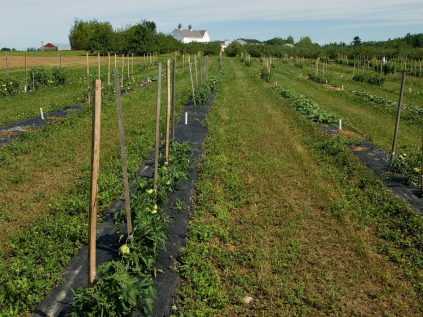
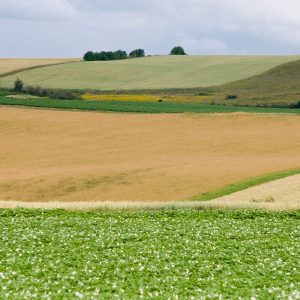
Food recovery is the collection of wholesome food for distribution to the poor and hungry. It follows a basic humanitarian ethic that has been part of societies for centuries. We know that gleaning, or gathering after the harvest, goes back at least as far as biblical days. The term field gleaning refers to the collection of crops either from farmers fields that have already been mechanically harvested or from fields where it is not economically profitable to harvest.
This fact sheet in the Food for ME series describes how you can set up a field gleaning project to benefit your community.
| Points to Remember Try to keep the activity to a manageable size. If you have a large number of volunteers, divide them into two or three smaller groups. Set a block of time for each to glean the fields. Or glean on two different days. Have refreshments. The time of year will be a factor in what you serve volunteers at gleaning time. Consider providing tools. If volunteers bring their own tools and water, you dont need to. However, the bring your own approach may decrease the number of volunteers that participate. Get help. Appoint some people to help volunteers harvest produce correctly. Think ahead. This years gleaners may be next years project organizers or leaders. |
Locating Farms for Donations
State departments of agriculture can also be extremely valuable resources in helping to identify donors for gleaning projects. These agencies are not only closely tied to the individual growers, but are also usually the offices that approve and establish farmers markets and organize the state and county fairs. Involving agencies can also help build a sense of community and cooperation at the local level.
Communicating with Potential Donors
Before going out to ask a farmer to donate, anticipate questions that the farmer is likely to raise. Keep in mind that a farmer is going to have some unique concerns that will need to be addressed. Its important not to make promises you cant keep, such as guaranteeing that no one will sue if they are injured while on the farm. Be prepared to discuss the liability provisions in detail; have a copy of federal and state Good Samaritan laws, or well-written summaries of their provisions, to give the farmer.*
Initiate a discussion of who will be responsible for providing the containers for the gleaned produce: Will they be provided by the farmer, or will they have to be brought in? What are the farmers concerns about having all these unknown people on the farm? Does the farmer have ground rules that need to be identified up front (such as no use of the restroom facilities or the telephone in the house; dont drive vehicles in certain areas)?
It is important to remember that producers are professionals whose time and product are valuable. Neither should be wasted by promising to glean and then not showing up, or showing up at the wrong time or place, or showing up with the wrong type of gleaners (e.g. your children or grandchildren, when the producer specifically said no children.)
| *
Federal Public Law 104-210, The Emerson Good Samaritan Food Donation
Act. Contact your local library for United States Code 42 USC Sec. 1791, or see
http://www.usda.gov/news/pubs/gleaning/appc.htm Maine Rev. Stat. Ann. tit. 14, § 166, Immunity for certain food donations. Contact your local library for Maine Revised Statutes Annotated Title 14 Section 166, or see http://janus.state.me.us/legis/statutes/14/title14sec166.html |
Setting Up a Project
Heres a step-by-step plan for a gleaning project.
What to Do: Advance Planning
| Ending Food Waste Food recovery is one creative way to help reduce hunger in America. It supplements federal food assistance programs by making better use of a food source that already exists. Up to 1/5 of Americas food goes to waste each year, with an estimated 130 pounds of food per person ending up in landfills. The annual value of this lost food is estimated at around $31 billion. But the real story is that roughly 49 million people could have been fed by those lost resources. Source: A Citizens Guide to Food Recovery, USDA, April, 1997. |
What to Do: One Week Before the Activity
What to Do: Day Before Activity
What to Do: Day of the Activity
Follow-Through
Activities
|
From
the Wholesaler to the Hungry In 1987, Mickey Weiss, a retired produce wholesaler, was visiting his son at the Los Angeles Wholesale Market. He watched as a forklift hoisted 200 flats of ripe, red raspberries, raspberries that had not sold that day, and crushed them into a dumpster! Weiss retirement didnt last long. Working out of donated office space at the market, he enlisted student volunteers to call community kitchens, while he persuaded friends in the produce business to put good food to good use. To make his dream a reality, he formed a team that included the Los Angeles Wholesale Produce Market and the Los Angeles County Department of Agriculture. Today, Mickey Weiss charitable distribution facility distributes more than two million pounds of produce a month throughout southern California. In 1991, Susan Evans and Peter Clarke joined forces with Weiss. Wanting to replicate his concept nationwide, they designed a systematic consultation process to help cities begin their own fresh produce operations. The project, From the Wholesaler to the Hungry (FWH), continues to help cities establish programs to channel large donations of fresh fruits and vegetables to community agencies. Adding fresh fruits and vegetables to the diets of low-income Americans improves their nutrition and their health, and helps prevent disease. Source: A Citizens Guide to Food Recovery, USDA, April, 1997. |
Food Recovery on the Internet
How You Can Help Recover Food
In todays world, where so many wake up in poverty and go to sleep hungry, each of us must ask, How can I help?
To get involved, use the ideas in the Food for ME fact sheets or call 1-800-GLEAN-IT, a toll-free hotline of the USDA and National Hunger Clearinghouse.
Prepared by Extension Educator Marjorie Hundhammer
Source: Team Nutrition Community Nutrition Action Kit, USDA, September, 1996.
For more information, contact your
University of Maine Cooperative Extension county office.
Published and distributed in furtherance of
Acts of Congress of May 8 and June 30, 1914, by the University of Maine Cooperative
Extension, the Land Grant University of the state of Maine and the U.S. Department of
Agriculture cooperating. Cooperative Extension and other agencies of the U.S.D.A. provide
equal opportunities in programs and employment.
Food for ME
Fact Sheet Series
A
Citizen Action Fact
Sheet for Community Food Recovery
Series includes:
Return to Publications Catalog Online Table of Contents
Return to Publications Homepage
Putting knowledge to work with the people of Maine

A Member of the
University of Maine System
Last Modified:
05/19/11
These pages are currently being maintained from the
Communications Office, University of Maine Cooperative Extension.
Send comments, suggestions or inquiries to www-questions@umext.maine.edu
COUNTY OFFICES | PROGRAMS | RESOURCES | PUBLICATIONS | NEWS AND EVENTS | UMAINE EXTENSION HOME | UMAINE