



To print a copy, we recommend downloading the (PDF) print version. (Download the free Adobe Acrobat Reader, if you don't already have it.)

HummingbirdHabitats
A Fact Sheet Series on Managing Lands for Wildlife

University of Maine Cooperative Extension
Bulletin #7131

Why a Backyard Wildlife Habitat

All living things need food, water, cover and space to survive. The area where an organism lives and meets its basic needs for survival is called its habitat. Different species often have different requirements for their habitat.

With increasing development by humans, habitats are rapidly disappearing and becoming less able to support life. One way we can help our world be healthier is to nurture the nature we have in our yards. Why wait for weekends or a vacation to connect with nature? It’s all around us and, with a bit of attention, it becomes a healthier habitat for us and for wildlife. Our yards, neighborhoods, towns and cities become much more enjoyable places to live.

Definitions

Basic wildlife survival needs: food, water, cover and space.

Habitat
: any area that contains the food, water, cover and space required by a species, available in the proper proportions and located within appropriate distances of one another.  All the requirements essential to the survival of a wildlife population are present in the habitat.

Limiting factor: any habitat element (food, water, cover, space)  that is in short supply and thereby hinders a species' ability to survive in any given area.

Home range: the area occupied by an animal when it performs its daily functions and travels to cover, food and water.

Territory: the area defended by an animal in an attempt to "reserve" sufficient habitat resources to support itself, its mate and offspring, or a particular group of individuals.

Source: Adapted from Enhancing Wildlife Habitats: A Practical Guide for Forest Landowners, NRAES-64, by Scott S. Hobson, John S. Barclay and Stephen H. Broderick, Northeast Regional Agricultural Engineering Service, Cooperative Extension.

The Benefits of Enhancing a Backyard Habitat

Beauty and Increased Property Values: Many plants, shrubs and trees benefit wildlife and are also attractive to people. The arrangement of these gives us privacy or a sense of spaciousness in a small area. A variety of plants adds interest to your yard and helps protect against drastic changes caused by insect pests and plant diseases. Beauty and health have value and, in this context, the beauty and health of your yard add to the value of your real estate.

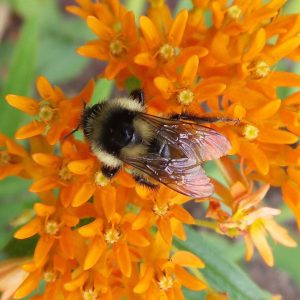
Value for Wildlife: Wildlife species can be attracted to your yard if you provide what they need. For instance, planting bee balm (Monarda didyma) provides food for hummingbirds and butterflies. Because each species has different requirements, a diverse habitat will attract more species. Wildlife will be better able to survive if habitats offer the food, water and cover they require.

"Green" Benefits: Well managed backyard habitats can save energy, protect soil and improve water and air quality. Trees and other plants hold soils in place during rain and wind. Vegetation helps keep sediment and contaminants from entering water bodies. In the right places, plants keep homes cool in summer and lessen heat loss in winter. They can offer privacy and reduce dust and noise from road traffic.

Plants also improve air quality by removing carbon dioxide from the air and replenishing it with oxygen. These effects are dramatically noticeable in developed areas. Plants can make towns and cities more comfortable and pleasant places to live, for humans and wildlife.

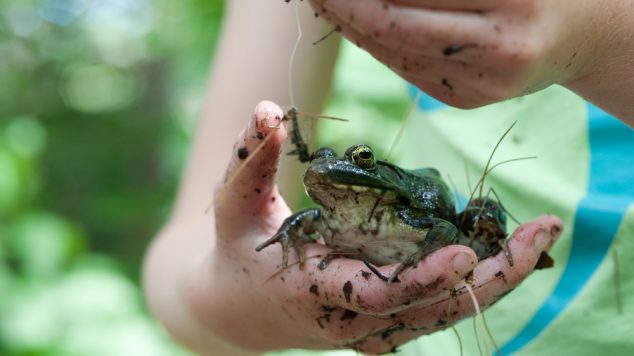
Insect Control: Let the wildlife eat insects. This is a great way to deal with annoying pests! Many species of wildlife eat insects as at least part of their diet. Kingbirds, yellow warblers, tree swallows, bats, frogs and dragonflies are just a few examples. As a result, you can reduce or eliminate the use of chemicals that could be harmful to wildlife and the environment.

Habitat for Humans: Why are industries that support birdwatching and gardening among the fastest growing in the nation? Children are fascinated with their discoveries in nature, and many adults have not lost this sense of wonder. Creating your own backyard habitat brings nature into your home range, offering opportunities to learn, to enjoy, and to pursue hobbies like drawing and photography right in your backyard.

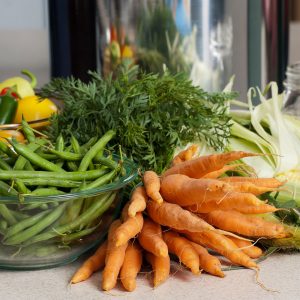
Food: Many of the plantings we use for food production are also valuable to wildlife. Herbs that we use are food for bees and butterflies. Many fruiting shrubs, vines and trees provide nectar for insects, as well as fruit for wildlife and for us.


Developed by Nancy Coverstone, Extension educator, University of Maine Cooperative Extension.

For more information, contact your University of Maine Cooperative Extension county office.

Sources:
    Landscaping for Wildlife,
by Carrol L. Henderson, Minnesota Department of Natural Resources, 1987.
    Enhancing Your Backyard Habitat for Wildlife,
by Peter M. Picone, Connecticut Department of Environmental Protection, 1995.

See the University of Maine Cooperative Extension Online Publications Catalog for the complete Habitats fact sheet series.


Published and distributed in furtherance of Acts of Congress of May 8 and June 30, 1914, by the University of Maine Cooperative Extension, the Land Grant University of the state of Maine and the U.S. Department of Agriculture cooperating. Cooperative Extension and other agencies of the U.S.D.A. provide equal opportunities in programs and employment.


Return to Publications Catalog Online Table of Contents
Return to Publications Homepage


Putting knowledge to work with the people of Maine

The University of Maine Cooperative Extension logo

A Member of the University of Maine System
Last Modified: 08/12/08
These pages are currently being maintained from the
Communications Office, University of Maine Cooperative Extension.
Send comments, suggestions or inquiries to www-questions@umext.maine.edu


COUNTY OFFICES | PROGRAMS | RESOURCES | PUBLICATIONS | NEWS AND EVENTS | UMAINE EXTENSION HOME  | UMAINE